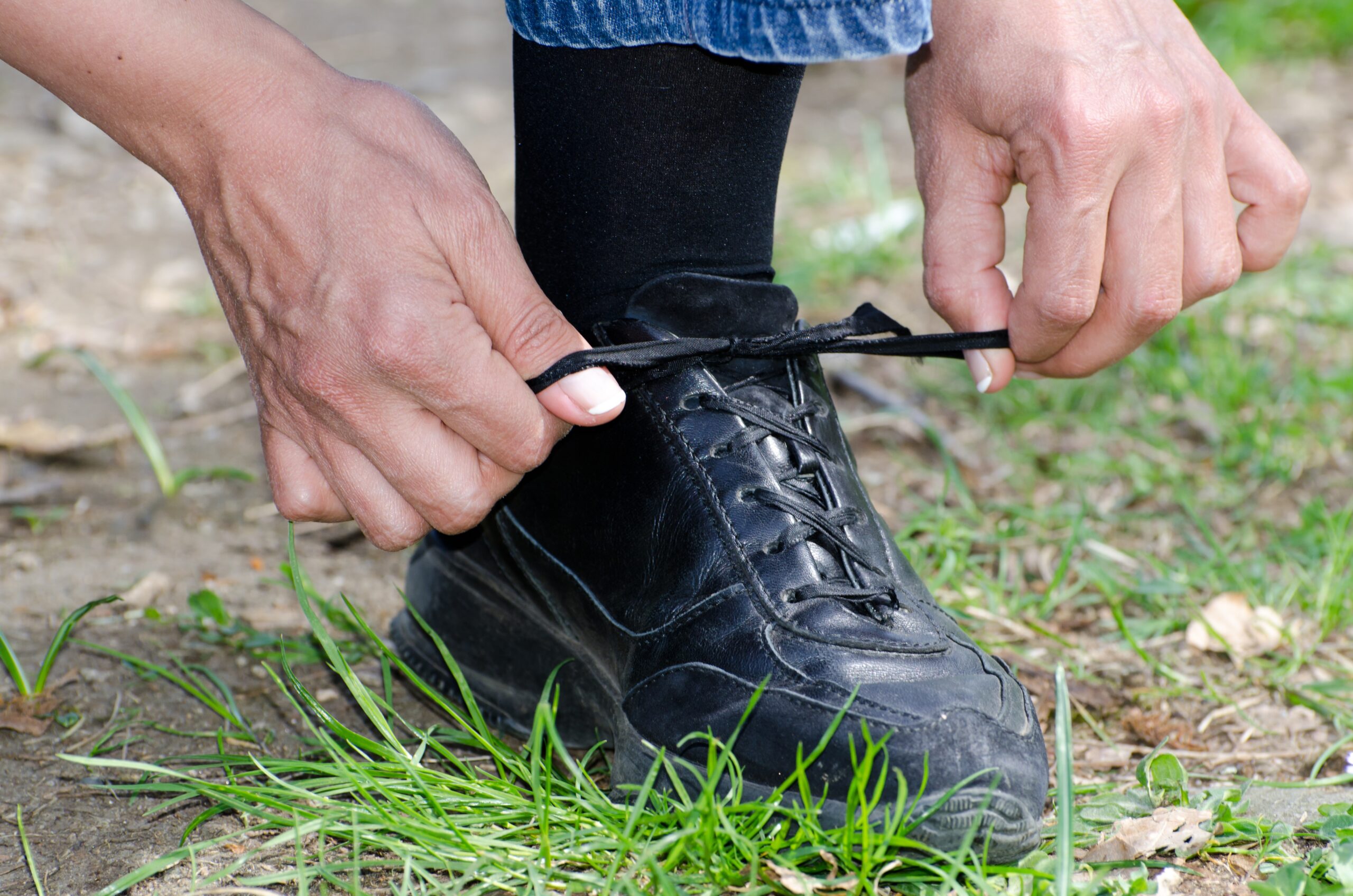
How to Lace Hiking Boots?

How ToLife & StyleTravel
1K
1 Comment
How to Lace Hiking Boots

When you purchase through links on our site, we may earn an affiliate commission. Check Affiliate Disclaimer

When you are heading for hiking, it is not about the quality of the boots, it’s also about how to lace them. A messy lacing job can lead to all kinds of problems such as painful blisters, blackened toenails or even a twisted ankle.

Lacing impacts circulation, stability and shock absorption. Imagine hiking a steep slope and constantly feeling your foot slide forward with every step. This happens usually due to poor lacing and is not a result of a bad fit. Or think about pressure on the top of your foot making every mile seem like a torture. Again, your lacing might be to blame.

Think of proper lacing like adjusting the straps on a backpack. If it’s too loose, it bounces around and throws off your balance. Too tight and it digs into your shoulder, making every step uncomfortable. But when you get it just right? It feels like it is a part of your body. That is exactly what the right lacing technique does for your hiking boots. If you’ve ever finished a hike with sore arcs, aching ankles or mysterious pressure points improper lacing may be the one to blame.

Understanding the Composition of a Hiking Boot

Before diving into the how to, let’s break down the structure of a hiking boot. Knowing each part helps you understand how lacing techniques affect performance.

  1. Eyelets

These are the metal or fabric reinforced holes the laces go through. They help maintain even tension.

  1. Hooks

Often found on mid and high cut boots, these allow for better ankle support and locking tension.

  1. Tongue

The padded flap under the laces that protects your foot from pressure and debris.

  1. Ankle Collar

The padded section around your ankle. How you lace this area affects your foot stability.

Hiking boots often have more stiff uppers, thick soles and specialized support systems. This structure makes proper lacing all the more important. You can’t just tie them up and go.

For instance, lacing around the ankle area determines how well your boots stabilize your foot on uneven land. And the tightness across the top of the foot directly affects blood flow and comfort during long treks.
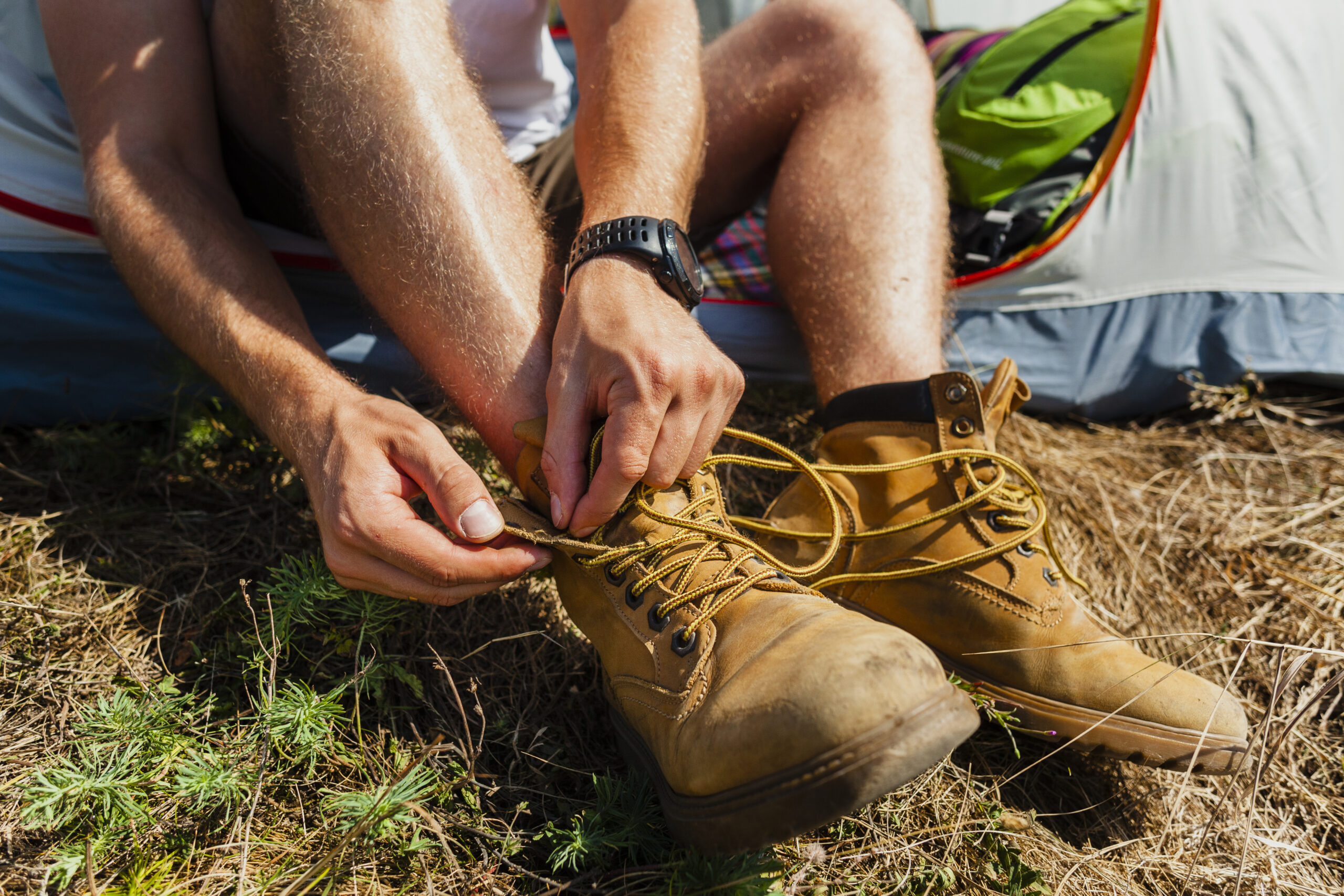
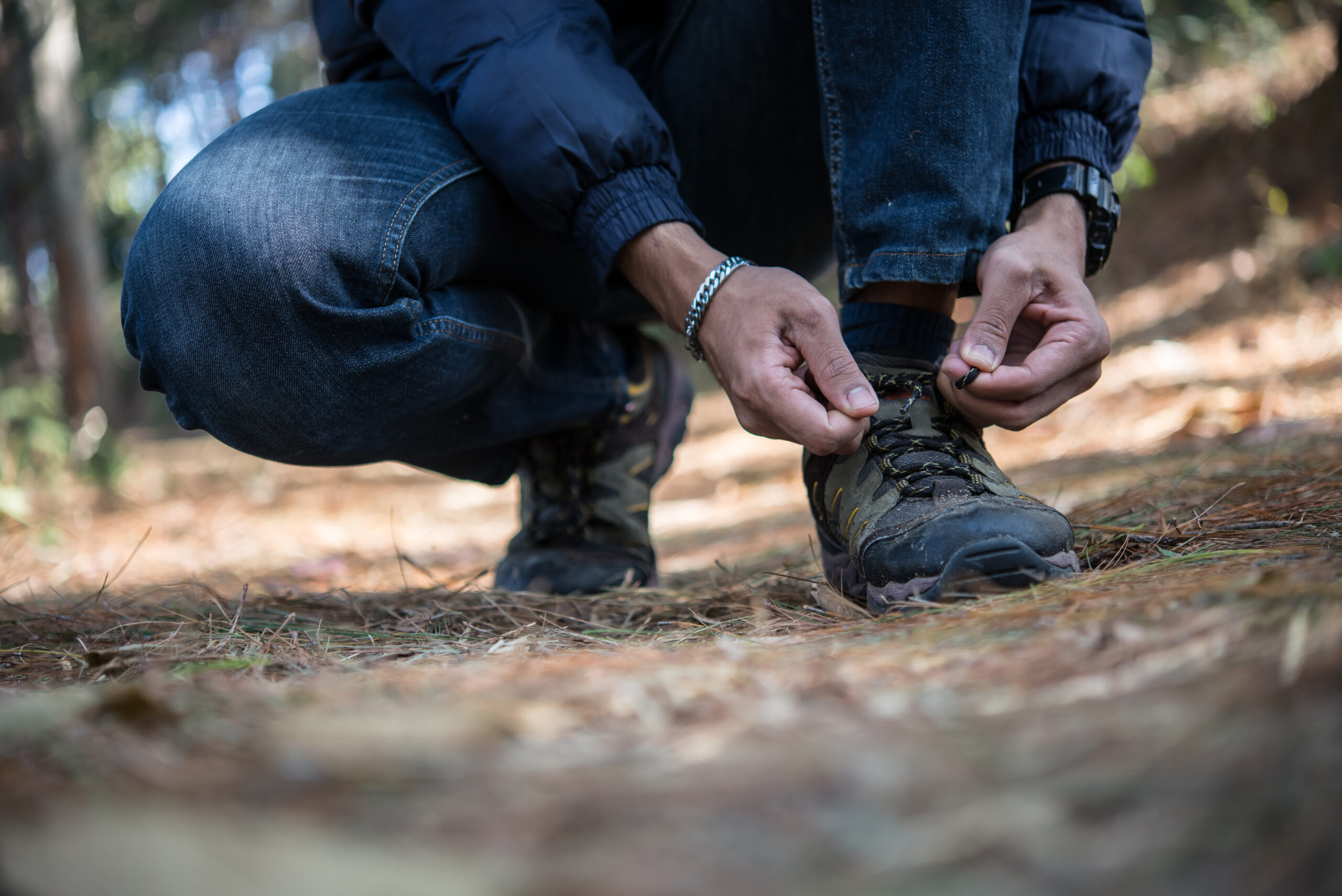
How to Lace Hiking Boots

Common Lacing Techniques for Hiking Boots

Different foot shapes, ground and hiking conditions determine which method you should use. Here are four essential techniques every hiker should know:

1. Surgeon’s Knot for Smooth Tension

The surgeon’s knot is a simple yet effective method to keep your laces tight and secure in a specific section of your boot. It is perfect when you want more control over pressure in different boot zones.

When to Use It

If your laces constantly loosen during hikes or if you feel slippage inside the boot, this knot is your fix.

How to Do It

  1. Lace your boots normally until you reach the section where you want to lock the tension.
  2. Wrap the lace around itself twice instead of once (like a double loop).
  3. Pull tight. The friction from the double wrap holds it firmly.
  4. Continue lacing as usual.

Why It Works

It locks in the tension so the upper and lower parts of your boots don’t interfere with each other. Your foot stays secure in the heel cup minimizing movement that causes blisters.

This knot is especially handy for long hikes where constant stopping to retighten your boots is a pain.

2. Heel Lock Lacing to Prevent Blisters

Blisters often happen because your heel lifts and rubs inside your boot. Heel lock lacing or lace lock secures the ankle and keeps your heel in place.

How to Do It

Lace the boots up to the top set of eyelets.

  1. Instead of crossing the laces, thread each lace back through the top eyelet on the same side to create a loop.
  2. Pull each lace across and through the loop on the opposite side.
  3. Pull tight then tie your knot.

Why It’s Effective

This technique creates a loop that pulls the ankle collar tight holding your heel down without crushing the top of your foot. It’s a lifesaver for declines when your toes might otherwise jam into the front of your boot.

3. Window Lacing for Pressure Relief

Some hikers suffer from top of foot pain due to high arches or tight boot structures. Window lacing provides relief by skipping over sensitive areas.

How to Do It

  1. Lace your boots normally until you reach the pain point.
  2. Skip the eyelets directly over the painful area. Tie the laces vertically instead of crossing them.
  3. Resume normal lacing above the skipped area.

When to Use It:
If you feel burning, numbness or irritation on the top of your foot after a few miles, this method helps reduce pressure right where you need it.

Toe Relief Lacing for Sore Toes

Long declines especially with a heavy pack can lead to sore or even bruised toes. The toe bang happens when your foot slides forward and smashes into the toe box repeatedly. That is where toe relief lacing comes in.

What It Does

This method reduces pressure in the toe box and gives your forefoot more room to move naturally.

How to Lace It

  1. Begin by skipping the first one or two eyelets closest to the toe box.
  2. Lace as normal starting from the third eyelet upward.
  3. Tie securely using your preferred method making sure the rest of the boot remains comfortable.

Why It Works

Skipping the initial eyelets loosens the tension around your toes reducing friction and impact. This method is especially useful on trails with sharp declines or for hikers who constantly lose toenails from pressure.

Lacing boots

Step by Step Guide on How to Lace Your Hiking Boots

Let’s put it all together. Here’s a universal guide to lacing your hiking boots effectively:

  1. Start from the Toes
    Begin lacing at the base. If you’re using toe relief, skip the first one or two eyelets.
  2. Maintain Even Tension
    Make sure each pull is firm but not too tight. Uneven tension causes pressure points.
  3. Use Knots Where Needed
    Insert surgeon’s knots at tension points typically just above the arch or before the ankle hooks.
  4. Lock the Heel
    Use heel lock lacing at the top to secure your ankle and prevent blisters.
  5. Double Knot or Use Lace Locks
    Prevent accidental untying by double knotting or using a lace lock clip.
  6. Do a Final Walk:
    Before hitting the trail, walk 100–200 feet. Feel for hot spots or tight areas. Adjust accordingly.

Tip:
Consider wearing the socks you will hike in while lacing. Thicker or thinner socks drastically change the fit.

Lacing boots

Tips to Avoid Common Lacing Mistakes

Even with the right technique, simple mistakes can ruin your hike. Avoid these common mistakes

  1. Over tightening
    Cutting off circulation leads to numb toes and cramps.
  2. Ignoring Pressure Points
    If you feel pain early, stop and fix it. Most blisters and bruises begin as small irritations.
  3. Uneven Tension
    Pulling harder on one side of the boot than the other can lead to imbalance. Always check that the boot feels balanced.
  4. Loose Top Laces
    Especially important on declines. If the top hooks or eyelets aren’t tight, your foot will slide forward and bang your toes.
  5. Not Re-Lacing During Breaks
    Feet swell over time. What was perfect at 8 a.m. may be torture at 1 p.m. Re-lace during lunch or water breaks for better comfort.

FAQS

Try using a surgeon’s knot or lace locks. Make sure you’re pulling the laces tight and even before tying the final knot.

Absolutely, most experienced hikers combine methods like toe relief at the bottom and heel locks at the top.

Yes. Window and toe relief lacing are ideal for wide forefeet. You can also skip eyelets to reduce tightness in specific areas.

Previous Post
Best Hiking Boots for Comfort & Grip in 2025
Next Post
How A Smart Thermostat Saves Energy and Reduce Bills